

In 2018, I started selling on Amazon US using the FBA (Fulfillment by Amazon) method, sourcing products from manufacturers on Alibaba and selling them under my own brand. I bought inventory in bulk and shipped it to Amazon’s warehouses; as sales came in, Amazon handled the delivery to the customers.
If I were starting e-commerce all over again today, instead of buying bulk inventory of products without knowing if they would sell, I would focus on personalized products and ship them as they are sold. Because I chose the wrong products at the start, much of my inventory sat stagnant in the warehouse. To avoid rising storage costs, I eventually had to liquidate them at a loss.
In 2022, we began selling personalized jewelry on Etsy. Having experienced the personalized product model for 4 years now, I see it as a massive opportunity for a new e-commerce entrepreneur.
Of course, we currently have private label brands on Amazon as well. Since we have a budget to invest, we continue to operate that business at the highest level. In fact, we grow our brands and sell them. However, if you don’t have a significant investment budget or aren’t a manufacturer yourself, doing private label via Amazon FBA is quite difficult.
Building a brand is a perfect business and the most promising long-term model, but many people with small budgets who try to do private label on Amazon run out of money midway. If they could just hold on for 6 months to a year, they might reach a great point, but they often can’t.
The most important thing in building a brand is finding places where there is opportunity and relatively less competition. Even more important than that is making a difference. I see that in personalized products, competition is generally lower, and there are areas where you can truly stand out.
The Turning Point: Challenges and Lessons
In April 2022, we partnered with a manufacturer—a small jewelry workshop in Turkey. We started uploading products to Etsy, agreeing with the manufacturer to ship products only as they were sold. We launched a campaign for a specific necklace and ring, distributing discounted products for momentum.
Sales started rolling in. Since it coincided with Mother’s Day, we reached 20 sales a day. However, as the products reached customers, 1-star negative reviews began to pour in. Because the reviews included photos, we realized the manufacturer was sending designs different from the ones we listed on Etsy.
Furthermore, once we hit 20 sales a day, the manufacturer couldn’t keep up, and shipments were delayed. Between the bad reviews and the delays, our shop’s sales plummeted almost to zero. We lost about $10,000 because of that manufacturer, and our launch budget went down the drain.
Optimizing for Profit
We searched for a new manufacturer and settled on one in Istanbul. We requested photos of every single item before it was shipped. While the quality was fine this time, we simply couldn’t turn a profit.
We were buying products for an average of $8–$8.50 and paying $15 for shipping to the US. With Etsy’s fees, we had to sell for at least $30 just to break even. Meanwhile, our competitors were selling the same items for $20–$25. Naturally, customers chose the more affordable options.
We shifted our focus entirely to reducing production and shipping costs:
Production: We partnered with a new manufacturer and cut our costs in half. A necklace we previously bought for $8, we now started buying for $4.
Shipping: We gradually reduced our shipping cost from $15 down to the $4–$6 range. Instead of shipping items individually every day, we waited until orders reached 50–100 units and sent them in bulk to the US.
Logistics: Initially, we sent bulk shipments every three days; now we do it daily. The products arrive at our partner warehouse in the US, allowing for very low-cost final delivery.
With Etsy’s fees included, selling at the $20–$25 price point now yields a profit margin of 25–35%. Since we matched our competitors’ prices, our sales volume began to surge.
Scaling the Success
After the US, we established the same shipping and warehouse system in the UK and Germany. Because products are now dispatched via local courier services, sales increased significantly—customers always prefer products that arrive quickly.
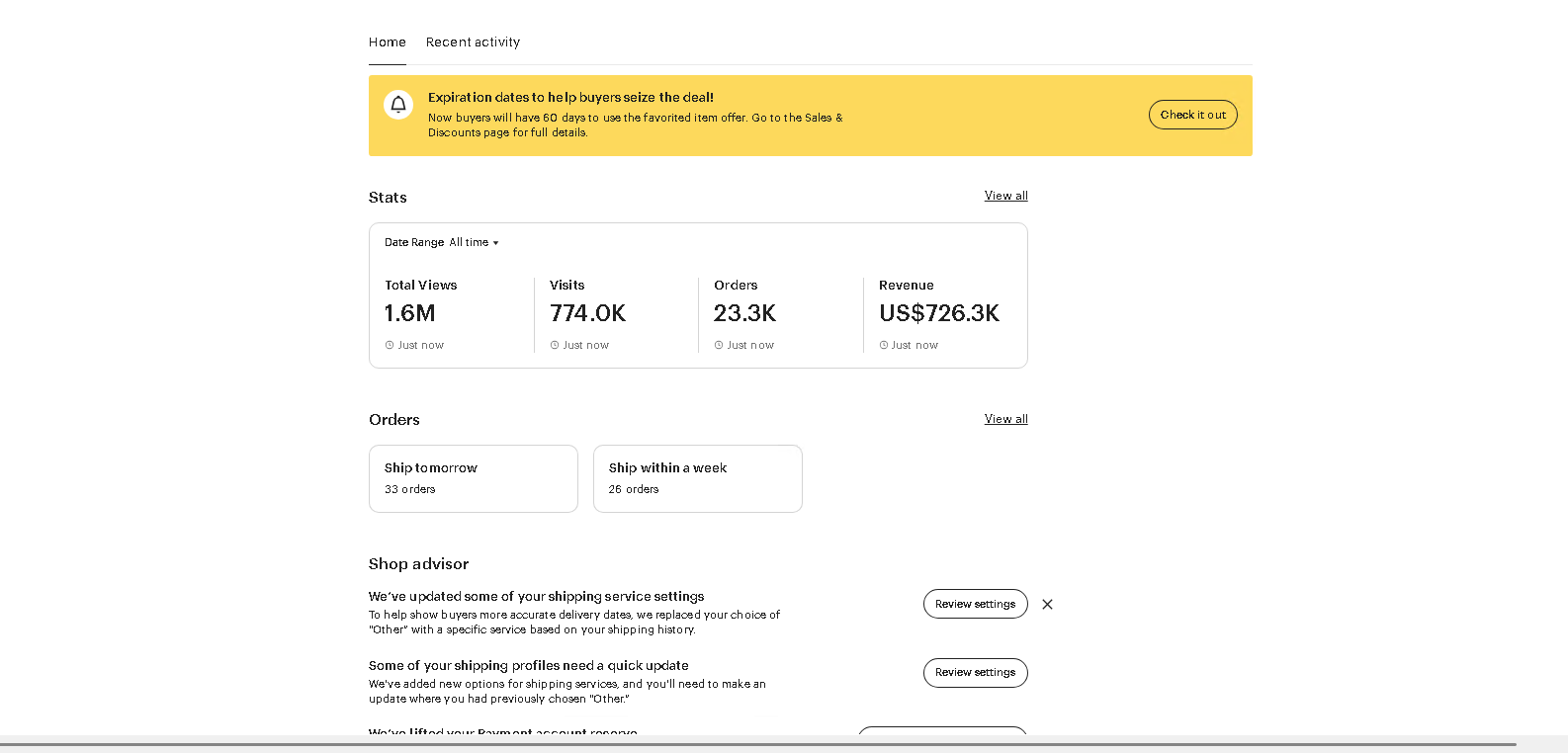
Through this system, our main store reached 23,300 sales and $726,000+ in revenue in 3 years. After establishing this blueprint, we opened two more stores selling similar products:
Store 2: Reached 3,134 sales and $74,267 revenue in 8 months.
Store 3: Reached 1,544 sales and $35,828 revenue in 5 months.